

AI meeting notes are turning the post-meeting scramble into a five-second job. Instead of replaying a recording or trusting your memory, an AI assistant joins the call, transcribes every word, identifies who said what, and produces a clean summary with action items, decisions, and follow-ups — usually before the participants have even left the room. This guide explains what AI meeting notes actually are, how the technology works under the hood, where it shines, where it fails, and the ten tools worth shortlisting in 2026.
Table of contents
- Key takeaways
- What are AI meeting notes?
- What AI meeting notes are not
- Other names you'll see
- How AI meeting notes work: the 5-stage pipeline
- Stage 1 — Audio capture
- Stage 2 — Speech-to-text transcription
- Stage 3 — Speaker diarization
- Stage 4 — LLM summarization and extraction
- Stage 5 — Integration sync
- Anatomy of an AI meeting note
- Benefits of AI meeting notes
- AI meeting notes vs meeting minutes vs transcripts vs manual notes
- When to use AI meeting notes (and when not to)
- Best fit
- When to skip the AI
- 10 best AI meeting note tools in 2026
- 1. Otter.ai — best overall for English
- 2. Fireflies.ai — best for CRM-heavy workflows
- 3. Fathom — best free tier
- 4. Notta — best for multilingual teams
- 5. Tactiq — best Chrome extension (no bot)
- 6. Granola — best macOS native experience
- 7. Read.ai — best meeting analytics
- 8. tl;dv — best for clip sharing
- 9. Sembly — best speaker diarization
- 10. NoteMeeting — best for Google Meet + multilingual
- Bonus mentions
- Quick comparison table
- How to choose the right AI meeting note tool
- Privacy and security: what to check before you adopt
- AI meeting notes in practice: a real workflow
- Frequently asked questions
- How are AI meeting notes different from a transcript?
- Can AI replace a human note-taker entirely?
- Does AI meeting note software work with Zoom, Google Meet, and Microsoft Teams?
- Is it safe to use AI meeting notes for sensitive meetings?
- Can AI generate action items automatically?
- What's the best free AI meeting note tool?
- Conclusion
Key takeaways
An AI meeting note is a machine-generated record with three core outputs: a full transcript, a structured summary, and a list of action items.
The pipeline behind it has five stages — audio capture, speech-to-text, speaker diarization, LLM summarization, and integration sync.
The ten best AI meeting note tools in 2026 differ less on transcription accuracy and more on integrations, privacy posture, and pricing — pick on use case, not feature lists.
Skip AI for legally privileged conversations, board minutes, and any meeting with strict consent restrictions — humans still own those.
What are AI meeting notes?
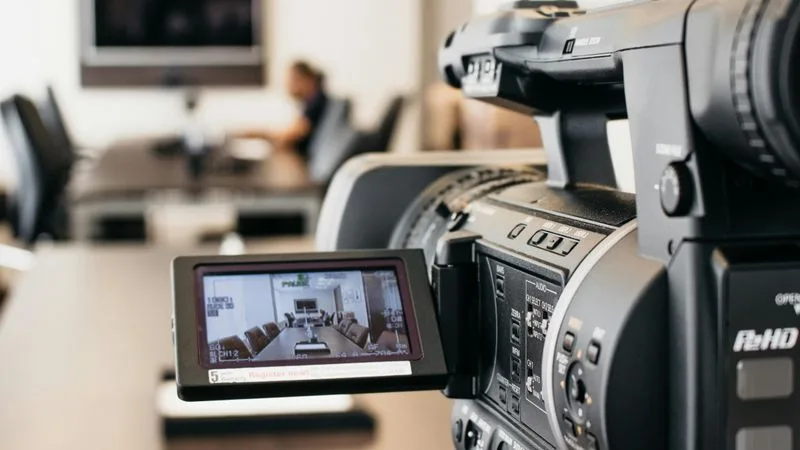
AI meeting notes are an automatically generated record of a meeting, produced by software that listens to the call (or processes a recording afterward), transcribes the speech, and uses a language model to extract the parts that matter. A finished AI meeting note typically delivers three things: a verbatim transcript, a one-page summary, and a list of action items with owners and deadlines.
What AI meeting notes are not
Not just a recording. A recording is raw audio. AI meeting notes are searchable, structured text.
Not just a transcript. A transcript is verbatim. AI meeting notes filter and synthesize the transcript into something readable.
Not the same as legal meeting minutes. AI output is a working draft. For board, AGM, or legally regulated meetings, a human still has to review and certify.
Other names you'll see
Vendors call this category by different names — AI notetaker, meeting AI, AI meeting assistant, conversation intelligence — but the core capability is the same: turn a meeting into structured text without anyone typing.
How AI meeting notes work: the 5-stage pipeline
Stage 1 — Audio capture
Two patterns here. Bot-based tools (Otter, Fireflies, Read.ai) join the meeting as a virtual participant and capture audio over the call platform's API. Local capture tools (Granola, Tactiq) listen to the device's microphone and speakers without joining the call — useful when bots aren't allowed.
Stage 2 — Speech-to-text transcription
The audio is streamed through an automatic speech recognition (ASR) model — typically Whisper, Deepgram, or a vendor's proprietary engine. Modern engines hit 90–95% word accuracy on clean English and 80–90% on accented or noisy audio. Domain vocabulary, names, and acronyms are still where errors cluster.
Stage 3 — Speaker diarization
The system identifies who spoke when, attaching speaker labels to every line of the transcript. Quality varies a lot here: in a 1:1 with two clear voices, diarization is near-perfect; in a roundtable with overlapping speech, accuracy can drop to 70%.
Stage 4 — LLM summarization and extraction
The labeled transcript is fed into a large language model that generates the summary, identifies decisions, and extracts action items with owners and deadlines. This is where vendor differentiation lives — the same transcript can produce noticeably different summaries depending on the model and prompt strategy a vendor uses.
Stage 5 — Integration sync
The final output is delivered where you actually work: emailed to attendees, posted in a Slack channel, written to a CRM record, attached to a Notion page, or pushed as tasks into Asana, Jira, or Linear. The sync layer is what turns a "nice transcript" into something teams actually use.
Anatomy of an AI meeting note

Every modern AI meeting note tool produces some combination of the following:
Full transcript — verbatim, time-stamped, attributed by speaker.
Summary — a paragraph or bullet list capturing what the meeting was about and what was decided.
Action items — task, owner, and deadline pulled out of the conversation.
Key decisions — explicit points where the group committed to something.
Speakers and chapters — who spoke, when topics shifted, with timestamps you can click to jump back.
Advanced outputs (vendor-dependent) — sentiment scores, talk-time analysis, follow-up email drafts, CRM field updates, or custom prompts that pull out anything else you care about.
Benefits of AI meeting notes
Time savings. The average post-meeting writeup takes 15–30 minutes. AI delivers a draft in seconds.
Better focus during the call. When you're not splitting attention between listening and typing, you participate more substantively.
Fewer dropped balls. Action items get pulled out automatically, owners get tagged, deadlines get extracted — far less slips through the cracks.
Async-friendly catch-up. Teammates who missed the meeting read a 30-second summary instead of watching a 60-minute recording.
Searchable institutional memory. Six months later, "what did we decide about the Q3 budget?" becomes a one-keyword search instead of an archaeological dig.
Productivity multiplier for distributed teams. The bigger the time-zone spread, the more value you get from a written record everyone can scan asynchronously.
AI meeting notes vs meeting minutes vs transcripts vs manual notes
These four artifacts get conflated constantly. Here's how they actually differ:
Artifact |
What it is |
Who creates it |
Best use |
|---|---|---|---|
Manual notes |
Personal jottings during a meeting |
Individual attendee |
Memory aid for the note-taker |
Transcript |
Verbatim word-for-word record |
Human or ASR engine |
Legal record, fact-checking, source for further processing |
AI meeting notes |
Structured summary + action items + decisions |
AI software |
Day-to-day team meetings, async sharing |
Meeting minutes |
Official, approved record of decisions |
Designated secretary or note-taker |
Board, AGM, regulated, or legally significant meetings |
In practice, AI meeting notes feed all three of the others: the transcript is a free side-output, the summary is essentially the meeting notes, and the structured fields make a great first draft of formal minutes that a human then certifies.
When to use AI meeting notes (and when not to)
Best fit
Recurring remote team meetings — stand-ups, sprint reviews, weekly check-ins where shared written context drives async work.
Sales discovery and demo calls — auto-populate CRM fields, surface objections, generate follow-up emails.
Customer success calls — track commitments made to clients, flag at-risk accounts.
Hiring panels and interview debriefs — capture interviewer feedback while it's fresh, share with the panel.
Project syncs across departments — a single source of truth for cross-functional decisions.
 Try NoteMeeting Free →
Summarize your meetings & videos automatically with NoteMeeting
Google Meet, Zoom, YouTube, Podcast — all in one extension.
When to skip the AI
Legally privileged conversations — attorney-client, medical, HR-disciplinary. Default to humans.
Board minutes and AGMs — these need verbatim motions, vote tallies, and certified signatures. Use AI only as a backup, not the official record.
Meetings with strict consent restrictions — in two-party-consent jurisdictions, every participant must agree to recording. Sometimes that's impractical.
Noisy environments or heavily overlapping speech — ASR accuracy and diarization both collapse below a certain audio quality.
Mixed-language conversations — most engines handle one language at a time well; code-switching often produces gibberish.
10 best AI meeting note tools in 2026
1. Otter.ai — best overall for English
The most established player. Strong real-time transcription, solid speaker labels, integrations with Zoom, Google Meet, and Microsoft Teams. The free tier covers the basics; paid tiers add CRM sync and longer history.
2. Fireflies.ai — best for CRM-heavy workflows
Notable for deep integrations with Salesforce, HubSpot, and Pipedrive. Bots auto-join calendar meetings, transcribe, and write back to CRM records. Heavier feature set, slightly steeper learning curve.
3. Fathom — best free tier
Generous free plan (unlimited recording on Zoom, Google Meet, and Teams) and clean summaries. The trade-off is fewer integrations and lighter analytics than Otter or Fireflies.
4. Notta — best for multilingual teams
Supports 50+ languages, including strong Asian-language coverage. Useful when meetings happen in Mandarin, Japanese, Korean, or Vietnamese alongside English.
5. Tactiq — best Chrome extension (no bot)
Lives in the browser, captures audio locally, no bot in the call. Great for teams whose security policies forbid third-party participants joining calls.
6. Granola — best macOS native experience
Runs as a Mac menu-bar app, no bot, no installer for the other side. Combines your typed notes with the AI transcript so you keep your own context. Currently macOS-only.
7. Read.ai — best meeting analytics
Goes beyond notes into meeting effectiveness scoring: talk-time balance, sentiment, engagement. Useful for managers wanting to coach team meeting hygiene.
8. tl;dv — best for clip sharing
Strong at creating short shareable highlight clips from longer calls. Popular with product, research, and customer-discovery teams.
9. Sembly — best speaker diarization
Strong at separating overlapping speakers in multi-person meetings. Wide language support and a reasonable free tier.
10. NoteMeeting — best for Google Meet + multilingual
NoteMeeting is built specifically around Google Meet, with native handling of multilingual conversations including Vietnamese ↔ English. If your team lives in Google Workspace and works across English and an Asian language, it's worth shortlisting.
Bonus mentions
Microsoft Copilot — bundled with Microsoft 365 / Teams, makes sense if your stack is already Microsoft-first.
Gemini for Google Workspace — bundled with Google Workspace, similarly attractive if you live in Google Meet and Docs.
Quick comparison table
Tool |
Best for |
Free tier |
Starting paid |
Languages |
|---|---|---|---|---|
Otter.ai |
Overall English |
Yes |
~$10/mo |
3+ |
Fireflies.ai |
CRM workflows |
Limited |
~$10/mo |
60+ |
Fathom |
Free unlimited |
Generous |
~$15/mo |
20+ |
Notta |
Multilingual |
Yes |
~$9/mo |
50+ |
Tactiq |
No-bot capture |
Yes |
~$8/mo |
40+ |
Granola |
macOS users |
Trial |
~$14/mo |
10+ |
Read.ai |
Analytics |
Yes |
~$15/mo |
20+ |
tl;dv |
Clip sharing |
Yes |
~$18/mo |
30+ |
Sembly |
Diarization |
Limited |
~$10/mo |
40+ |
NoteMeeting |
Google Meet + EN/VI |
Yes |
~$9/mo |
10+ |
Prices are approximate as of 2026 — always check the vendor's pricing page before committing. Most tools also offer team and enterprise plans with SSO and admin controls.
How to choose the right AI meeting note tool
Where do your meetings actually happen? If you live in Google Meet, prioritize tools with native Google integrations. Microsoft Teams shop? Copilot is the path of least resistance. Mixed? Pick a vendor with strong support for all three.
What's your primary language? Otter and Fathom are English-first. Notta and Sembly handle 40+ languages. NoteMeeting is built around Vietnamese-English handoff.
Bot or no bot? Some companies forbid third-party participants in meetings. If yours does, you need a no-bot solution like Tactiq or Granola.
What integrations matter most? Sales teams need CRM sync. PM teams need Jira/Linear/Asana. Knowledge teams need Notion/Confluence. Map your stack before you buy.
How important is summary quality? Run a free trial on a typical meeting. Compare summaries side-by-side. The differences are real and consistent across meetings.
What's your privacy bar? Cloud-only? Cloud with EU data residency? On-prem? See the next section.
Privacy and security: what to check before you adopt
This is the part most teams under-think. AI meeting notes mean the contents of every conversation are processed (and often stored) by a third party. A few things to verify before you sign:
Recording consent laws. The U.S. has both one-party and two-party consent states (California, Florida, Pennsylvania, and others require all participants to consent). The EU and UK require consent under GDPR. International calls may straddle multiple jurisdictions — default to all-party consent.
Data residency. Where is the audio stored, and where is it processed? EU operations often need EU data residency. Check the vendor's data processing addendum.
Compliance certifications. Look for SOC 2 Type II at minimum. For healthcare, HIPAA. For EU customers, GDPR. For finance, additional region-specific requirements.
Retention controls. Can you set automatic deletion after N days? Can you delete a single meeting on demand? Can users opt-out per-meeting?
Training data usage. Does the vendor use your meeting content to train their models? The default should be no, with opt-in available — if it's the other way around, walk away.
Cloud vs on-prem. Highly regulated industries may need self-hosted or VPC-deployed options. Most consumer SaaS tools won't fit; enterprise tiers from larger vendors usually do.
AI meeting notes in practice: a real workflow
Here's what a typical day with an AI meeting note tool looks like for a sales team:
Before the meeting. The tool watches your calendar. When a call is scheduled with a recording-eligible meeting link, it auto-joins as a bot — or, for no-bot tools, it pre-loads in the browser tab. Your CRM record for the prospect is already pulled up.
During the meeting. The bot transcribes silently. You see a small indicator that recording is in progress. You participate normally — no typing, no second screen for note-taking. The conversation flows.
Right after the meeting. Within 30–90 seconds of the call ending, you get a summary: 3-paragraph recap, list of decisions, action items with owners and deadlines, and links to the full transcript. The CRM record auto-updates with stage notes and next-step fields. A draft follow-up email is ready in your outbox; you tweak two lines and send.
The next day. Your manager pulls a dashboard view of the team's discovery calls — average talk-time, common objections this week, deals at risk. None of this needed a human to type a single note.
Frequently asked questions
How are AI meeting notes different from a transcript?
A transcript is a verbatim word-for-word record of the audio. AI meeting notes start with the transcript and add structure: a summary, action items, decisions, and speaker attribution. The transcript is raw data; AI meeting notes are the finished product you'd actually share.
Can AI replace a human note-taker entirely?
For most internal team meetings, yes. For board minutes, AGMs, legally privileged conversations, or any meeting where a certified record is required, no — a human still has to review and certify. The realistic split today is AI handles 80% of meetings end-to-end and reduces the human workload on the remaining 20% by half or more.
Does AI meeting note software work with Zoom, Google Meet, and Microsoft Teams?
The major tools (Otter, Fireflies, Fathom, Read.ai, Notta) support all three. Some no-bot tools work via the browser (Tactiq) or the operating system (Granola) and are platform-agnostic by design.
Is it safe to use AI meeting notes for sensitive meetings?
It depends on the vendor and your industry. For routine internal meetings, the major tools are safe enough. For sensitive content (legal, healthcare, M&A, board governance), you need SOC 2 + HIPAA / equivalent compliance, EU data residency if applicable, and sometimes self-hosted deployment. Don't use a free consumer tool for confidential strategy or regulated data.
Can AI generate action items automatically?
Yes. Modern AI meeting tools extract action items with the task, the owner, and a deadline (when one was mentioned). Quality varies — about 80% of clearly stated action items are caught accurately. Humans still need to review the list before acting on it.
What's the best free AI meeting note tool?
Fathom currently has the most generous free plan — unlimited meetings on Zoom, Google Meet, and Microsoft Teams with no time cap, plus AI summaries. Otter and Notta also offer usable free tiers with monthly minute caps.
Conclusion
AI meeting notes are at the point where, for most teams, not using them is the unusual choice. The technology is past "experimental" and into "table stakes" — accurate enough on real calls, integrated enough with the tools you already use, and priced low enough that the cost of an hour saved per week pays for the whole stack. Pick a tool that matches your meeting platform, your language mix, and your privacy bar — start with a two-week trial on real meetings — and let the post-meeting writeup become a thing your team used to do.